
National Symbols of India – Complete Guide
Introduction
The National Symbols of India are powerful representations of the country’s identity, values, heritage, and unity. Every independent nation chooses certain symbols that reflect its culture, history, and aspirations. India, being a land of immense diversity, has selected symbols that beautifully capture its spirit.
From the proud Tiranga waving in the sky to the majestic Bengal Tiger roaming the forests, each national symbol tells a meaningful story. These symbols are not just for textbooks — they inspire patriotism, remind citizens of their shared heritage, and strengthen national unity.
This complete guide is specially written in simple, student-friendly English. Whether you are preparing for competitive exams, school tests, or general knowledge improvement, this article will help you understand every major national symbol of India in detail.
Table of Contents
National Flag of India – Tiranga
National Emblem of India
National Anthem – Jana Gana Mana
National Song – Vande Mataram
National Animal – Bengal Tiger
National Bird – Indian Peacock
National Flower – Lotus
National Tree – Banyan Tree
National Fruit – Mango
National River – Ganga
National Aquatic Animal – Ganges River Dolphin
National Heritage Animal – Indian Elephant
National Reptile – King Cobra
National Calendar – Saka Calendar
Importance of National Symbols
Interesting Facts About National Symbols of India
Frequently Asked Questions (FAQs)
Conclusion
National Flag of India – Tiranga
Adopted on: 22 July 1947
The National Flag of India, popularly known as the Tiranga, is one of the most respected national symbols. It represents the country’s independence, unity, and pride.
Design of the Indian Flag
The flag has three horizontal stripes:
Saffron (top) – Represents courage and sacrifice
White (middle) – Represents peace and truth
Green (bottom) – Represents faith and prosperity
At the center of the white band is the Ashoka Chakra, a navy-blue wheel with 24 spokes.
Meaning of the Ashoka Chakra
The Ashoka Chakra symbolizes:
Law and righteousness
Continuous progress
Movement and dynamism
The flag was designed by Pingali Venkayya, and it was officially adopted just before India became independent.
National Emblem of India – Lion Capital of Ashoka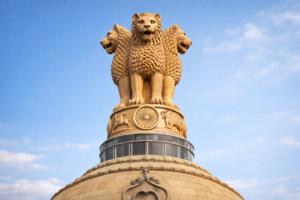
Adopted on: 26 January 1950
The National Emblem of India is taken from the Lion Capital of Ashoka, originally built by Emperor Ashoka at Sarnath.
Features of the National Emblem
The emblem shows:
Four Asiatic lions standing back-to-back
A circular abacus below them
The national motto “Satyameva Jayate”
Meaning of “Satyameva Jayate”
“Satyameva Jayate” means “Truth Always Triumphs.”
It reflects India’s deep respect for truth, justice, and moral values.
The emblem appears on:
Currency notes
Government documents
Passports
Official seals
National Anthem – Jana Gana Mana
Adopted on: 24 January 1950
Written by: Rabindranath Tagore
“Jana Gana Mana” is the National Anthem of India. It was originally written in Bengali and later adopted in its Hindi-Sanskrit form.
Key Facts
Only the first stanza is the national anthem
Official duration: 52 seconds
First sung publicly: 1911
Importance
The anthem is played during:
National celebrations
School assemblies
Official ceremonies
Sports events
It promotes unity and respect for the nation.
National Song – Vande Mataram
Written by: Bankim Chandra Chatterjee
From: Novel Anandamath
“Vande Mataram” is the National Song of India. It played a crucial role during the Indian freedom movement.
Why It Is Important
Inspired freedom fighters
Symbolized love for the motherland
Became a powerful patriotic slogan
Although it is not the national anthem, it holds a very special emotional place in Indian history.
National Animal – Bengal Tiger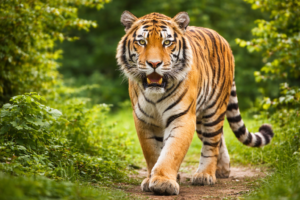
Declared in: 1973
The Bengal Tiger is the National Animal of India. It represents power, strength, courage, and grace.
Why Tiger Was Chosen
The tiger was selected because:
It is native to India
It reflects India’s wildlife richness
It symbolizes strength and agility
Conservation Efforts
India launched Project Tiger (1973) to protect the declining tiger population. Today, India has the largest number of wild tigers in the world.
National Bird – Indian Peacock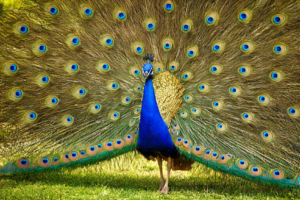
Declared in: 1963
The Indian Peacock (Peafowl) is known for its colorful feathers and graceful dance.
Symbolism
The peacock represents:
Beauty
Grace
Pride
Cultural richness
Interesting Traits
The male is called peacock
The female is called peahen
Famous for its rain dance
The bird is protected under the Wildlife Protection Act.
National Flower – Lotus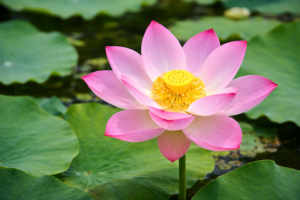
The Lotus is India’s national flower and holds deep cultural and spiritual significance.
Symbolic Meaning
The lotus represents:
Purity
Spiritual awakening
Hope
Strength
One of the most beautiful qualities of the lotus is that it grows in muddy water yet remains clean and fresh. This symbolizes rising above difficulties.
National Tree – Banyan Tree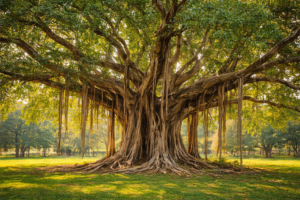
The Banyan Tree is the national tree of India and symbolizes immortality and stability.
Key Features
Extremely long lifespan
Large spreading canopy
Provides shelter to many organisms
Cultural Importance
In many Indian villages, the banyan tree is traditionally used as a meeting place. It represents longevity and the eternal nature of Indian culture.
National Fruit – Mango
The Mango is proudly known as the “King of Fruits” in India.
Why Mango Is Special
Native to the Indian subcontinent
Loved across the country
Rich in taste and nutrition
Cultural Role
Mango leaves are used in:
Festivals
Religious rituals
Wedding decorations
India is also one of the largest producers of mangoes in the world.
National River – Ganga
Declared in: 2008
The River Ganga (Ganges) is the National River of India. It is not just a river but a lifeline for millions of people.
Importance of the Ganga
Supports agriculture
Provides drinking water
Holds deep religious significance
Supports biodiversity
The river originates from the Himalayas and flows through several Indian states before reaching the Bay of Bengal.
National Aquatic Animal – Ganges River Dolphin
The Ganges River Dolphin was declared the National Aquatic Animal to highlight the importance of river conservation.
Why It Matters
Indicator of a healthy river ecosystem
Endangered species
Unique freshwater dolphin
Protecting this dolphin also helps protect the entire river environment.
National Heritage Animal – Indian Elephant
Declared in: 2010
The Indian Elephant is the National Heritage Animal of India.
Symbolism
It represents:
Wisdom
Strength
Royalty
Cultural heritage
Elephants have been part of Indian traditions, festivals, and history for thousands of years.
National Reptile – King Cobra
The King Cobra is India’s National Reptile and the world’s longest venomous snake.
Key Facts
Can grow up to 18 feet
Known for its hood
Important in ecological balance
Despite its fearsome image, the king cobra usually avoids human contact.
National Calendar – Saka Calendar
Adopted in: 1957
India uses the Saka Calendar as its official national calendar alongside the Gregorian calendar.
Features
Year begins with Chaitra month
Based on solar calculations
Used in government publications
The Saka Era begins in 78 AD.
Importance of National Symbols of India
The National Symbols of India play a vital role in shaping the country’s identity.
Why They Matter
Promote national unity
Build patriotic feelings
Represent cultural heritage
Create international recognition
Encourage environmental conservation
For students, learning these symbols builds both knowledge and national pride.
Interesting Facts About National Symbols of India
Here are some fascinating facts:
The Ashoka Chakra has exactly 24 spokes.
The Indian flag must always be made of khadi (as per traditional rules).
The Bengal Tiger replaced the lion as national animal in 1973.
Peacocks cannot fly long distances despite having wings.
The Banyan Tree can live for hundreds of years.
India has the largest wild tiger population in the world.
The Ganges River Dolphin is almost blind and uses echolocation.
Mango is mentioned in ancient Indian scriptures.