
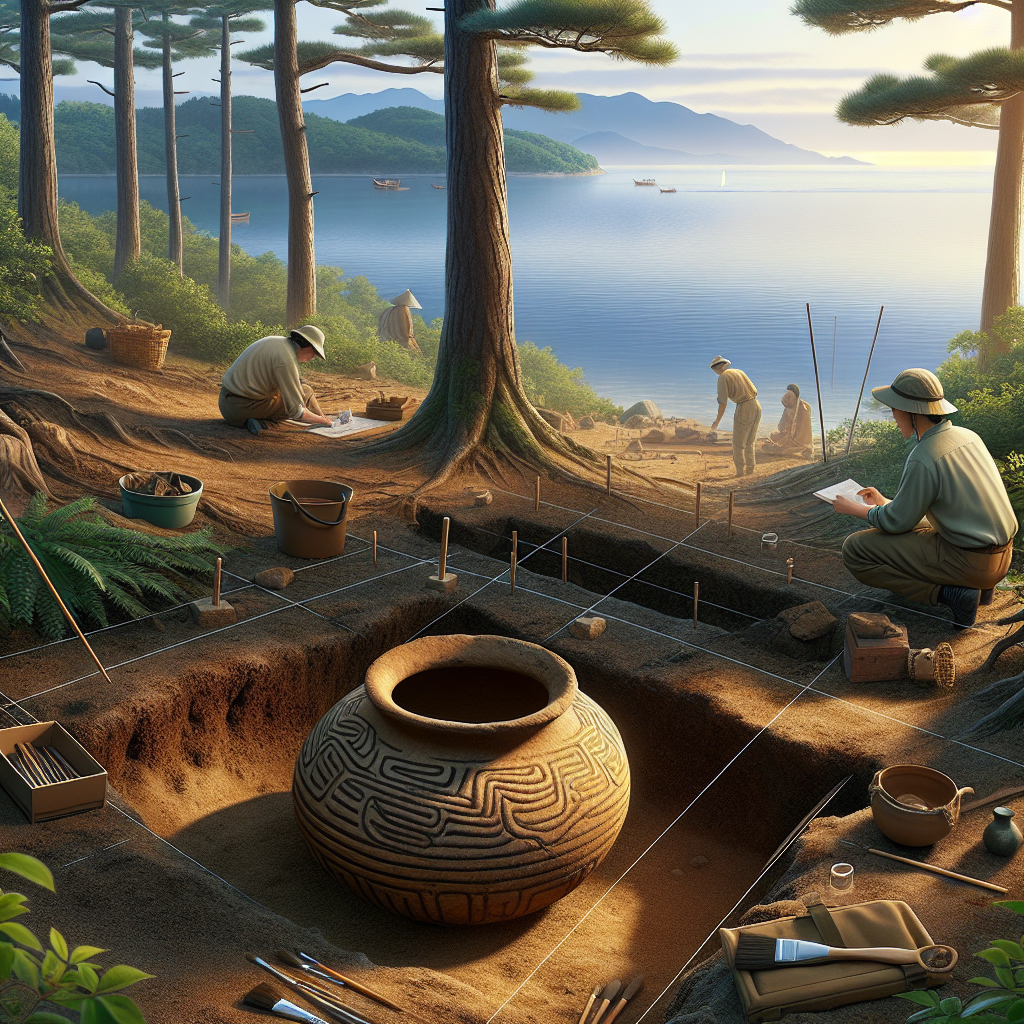
Unearthing the Past: 10,000-Year-Old Pottery Found in Japan’s Lake Biwa
Imagine stumbling upon something crafted by human hands over 10,000 years ago. That’s exactly what happened recently at Japan’s Lake Biwa. A group of archaeologists discovered fragments of ancient pottery buried beneath the lakebed — and it’s offering a fascinating glimpse into the lives of people from the distant past.
This incredible find isn’t just about artifacts. It’s also about human ingenuity, survival, and culture in the Stone Age — long before cities, temples, or even written language. Let’s take a closer look at this amazing discovery and why it matters today.
What Makes This Pottery So Special?
At first glance, pottery shards might not seem like a big deal. But these aren’t just any broken pieces of clay. They belong to the Jōmon period, an era in Japanese history that dates back more than ten millennia.
Yes, you read that right — more than 10,000 years old! That means this pottery is older than the pyramids of Egypt or Stonehenge in England.
Found beneath Lake Biwa in Japan’s Shiga Prefecture, these pieces were part of ancient ceramic pots used by early inhabitants. What’s really amazing is how well they were preserved underwater. Thanks to their clay composition and the cold, still waters of the lake, they stayed intact for thousands of years.
Why Lake Biwa?
This quiet, scenic lake in central Japan may not seem like a hotbed for archaeological discoveries. But Lake Biwa is one of the oldest lakes in the world — estimated to be over 4 million years old. It has witnessed the journey of human civilization across the ages.
Back in ancient times, people settled near water sources for obvious reasons: fishing, drinking water, and farming. That’s probably why these Jōmon people chose the shores of Lake Biwa to call home.
What Do We Know About the Jōmon People?
The people who made these pots were part of the Jōmon culture, one of the oldest known cultures in human history. ‘Jōmon’ actually means “cord-marked,” referring to the unique rope patterns often impressed into the ceramic before it was fired.
These early Japanese communities were primarily hunter-gatherers. They:
- Fished and hunted for their food.
- Gathered nuts and fruits from nearby forests.
- Lived in pit dwellings, which were dug into the ground.
- Crafted pottery for cooking, storing, and ceremonial purposes.
What’s fascinating is that pottery from this period is among the oldest found anywhere in the world. That suggests that the Jōmon people were ahead of their time when it came to developing ceramic technology.
How Was the Pottery Discovered?
Japanese researchers and archaeologists have long suspected that Lake Biwa held archaeological secrets. This recent dig revealed ceramic pieces along with other artifacts buried in sediment on the lake’s bottom.
Thanks to advanced underwater excavation tools and sonar mapping, the team was able to locate these hidden treasures without damaging them. Each item recovered is being cleaned, examined, and cataloged — helping researchers build a clearer picture of how people lived in ancient Japan.
So, What Can Ancient Pottery Teach Us?
Some might wonder: what’s the big deal about old pots?
The answer? A whole lot more than you think.
Pottery tells us about how people:
- Cooked their food — Did they boil, roast, or ferment?
- Stored their water and grains — What shape was the pot? Was it covered?
- Traded with others — Was the pottery style unique to one group, or shared across regions?
- Connected spiritually — Were these pots used in rituals or burials?
These artifacts act like a time machine, helping us understand daily life in a way books and bones can’t always explain.
How This Discovery Impacts History
This find is one of the oldest submerged archaeological discoveries in Japan. It adds a rich new chapter to Japan’s prehistoric story and helps fill in the blanks about early human innovation.
More importantly, it challenges the idea that early humans lived simple or “primitive” lives. Crafting detailed pottery in a time without metal tools or farming techniques shows creativity, adaptability, and intelligence.
And who knows? There may be even older relics beneath Lake Biwa, just waiting to be uncovered.
What’s Next for These Ancient Pots?
Currently, the pottery fragments are being studied by a team of experts to determine their exact age and use. Some pieces might soon go on display in museums, allowing the public to see them up close.
In the meantime, the excavation continues. With each dive and every new fragment, we take one more step toward understanding the complex history of early humans in East Asia.
Why Should You Care?
It’s easy to think that the past has nothing to do with us. But when we learn about the people who walked this Earth long before us, we begin to understand where we came from — and maybe even where we’re going.
And let’s be honest — there’s something incredibly cool about knowing that people were making art, crafting tools, and building lives 10,000 years before smartphones, cars, or even written words existed.
So, the next time you’re washing your coffee mug or putting leftovers in a ceramic bowl, remember: you’re using a technique that started with early humans huddled around firelight, experimenting with wet clay by ancient lakes.
Final Thoughts
The discovery of 10,000-year-old pottery in Lake Biwa isn’t just an archaeology headline. It’s a reminder of how deep and rich human history truly is. Every chipped corner of ancient clay tells a story — of community, survival, and creative spirit.
Whether you’re a history buff, a student, or just someone curious about the world, take a moment to appreciate the wonders hiding beneath our feet — or in this case, beneath a peaceful lake in Japan.
Stay tuned as archaeologists continue to dive deep into our shared past — one pot at a time.
Keywords:
10,000-year-old pottery, Lake Biwa pottery discovery, ancient Japanese pottery, Jōmon period, archaeology in Japan, prehistoric artifacts, underwater excavation Japan, Jomon culture history